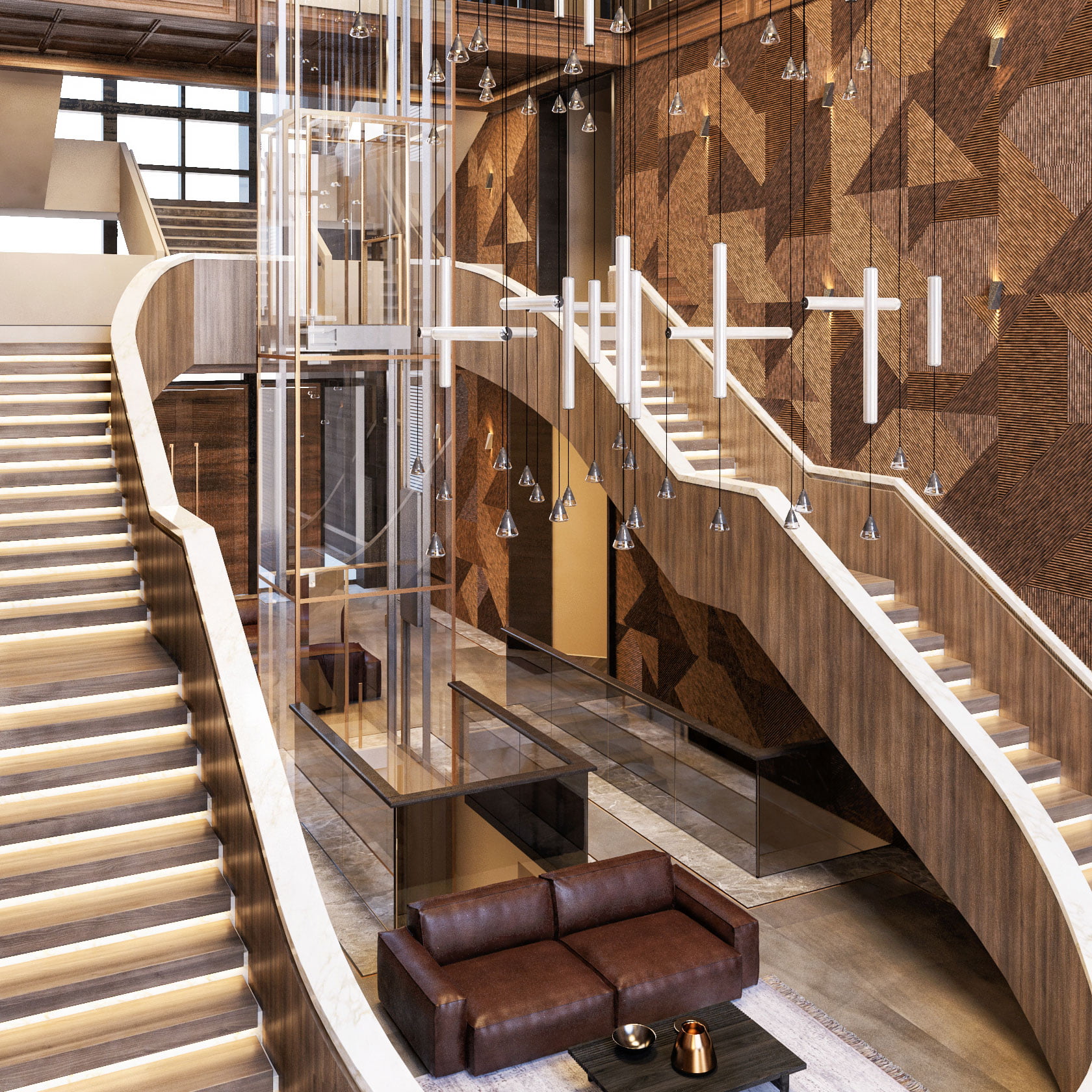
3D architectural visualization artists create digital 3D models of buildings and interior design projects using specialized software and tools. They create realistic 3D renderings to help clients visualize what their design projects will look like before it’s built. They work closely with architects, interior designers, and real estate clients to ensure accuracy and may incorporate landscaping and external features. Skills required include 3D modeling proficiency, architectural and interior design knowledge, attention to detail, and effective communication and collaboration skills.
3D architectural visualization artists play a crucial role in the design process as their work helps avoid costly mistakes and miscommunication during the design process. Their visualizations allow clients to make prompt decisions about design and materials, resulting in a more efficient and cost-effective design process.

PROFICIENCY IN 3D MODELING SOFTWARE
Proficiency in 3D modeling software is a critical skill that every 3D architectural visualization artist must possess. It is the foundation of creating digital 3D models of buildings and spaces, with it, 3D artists can produce high-quality 3D architectural renderings. A 3D artist must be familiar with the software’s tools, functions, and workflows to create accurate, detailed, and visually stunning 3D models and renderings. They must also understand the modeling techniques and principles, including edge flow, topology, and UV mapping. These skills allow an artist to manipulate and refine 3D models to achieve the desired results. Moreover, troubleshooting issues that may arise during the modeling process, such as problems with geometry or rendering, is also an essential part of the process.
Staying informed about the most recent advancements and trends in 3D modeling software is crucial for any artist. It enables them to incorporate new tools and techniques into their workflow to improve their efficiency and the quality of their work. Artists should also adapt to new software as it emerges, as well as adapt to software upgrades.
UNDERSTANDING OF ARCHITECTURE AND DESIGN PRINCIPLES
Understanding architecture and interior design principles is essential for any 3D architectural visualization artist. A 3D artist must understand the basic architectural and interior design principles, including form, space, scale, proportion, and function. They must be familiar with architectural and interior design styles, materials, and construction techniques to create accurate and aesthetically pleasing 3D visualizations.
Furthermore, a comprehensive comprehension of fundamental design principles, such as color theory, composition, and balance, is imperative for a 3D artist. These principles are crucial in creating a visually appealing design that accurately reflects the architect’s or interior designer’s vision. They must also be able to balance the technical accuracy of the 3D model with the artistic interpretation of the design.
Furthermore, an artist must understand the significance of lighting in architectural visualization. An artist should be able to use lighting to create an appropriate mood and atmosphere in the visualization, highlighting the design features of the building or spaces. They must also have a good sense of composition, using the principles of perspective and framing to create compelling images.
ATTENTION TO DETAIL
Attention to detail is an essential attribute for a 3D architectural visualization artist. Accuracy and precision are critical when creating a highly detailed representation of a building in a 3D model. The artist must ensure that the final output faithfully represents all design aspects.
The artist must carefully study and understand the architectural drawings and specifications provided by the architect. They must use this information to create a 3D model that accurately reflects the design, paying close attention to the scale, the placement of windows, doors, fixtures, and the materials used.
Additionally, the artist must understand texturing, lighting, and 3d rendering well. They must pay close attention to minor details, such as the texture of the materials and the placement of light sources, to create a visually stunning and technically accurate 3D model.
TIME MANAGEMENT AND ORGANIZATIONAL SKILLS
Time management and organizational skills are crucial, and a 3D architectural visualization artist must possess them to succeed in the industry. The 3D artist must be able to manage their time effectively to meet project deadlines, and they must also be able to organize their work to ensure that they meet project specifications.
The 3D artist must clearly understand the project’s scope and requirements and create a plan to manage their time efficiently. This involves setting realistic deadlines, breaking the project into manageable tasks, and prioritizing work based on the project’s critical workflow.
In addition to time management the knowledge of design principles and their relevance in 3D architectural visualization, is a strong organizational skill a 3D artist must possess. They must organize their files and assets, create efficient workflows, and communicate clearly with team members and clients. This involves creating a system for version control, file naming, and asset management to ensure the project runs smoothly.
Good time management and organizational skills are essential for producing high-quality 3D architectural visualizations and maintaining positive client relationships. By effectively managing their time and organizing their work, the 3D artists meet project deadlines, provide results that meet the client’s expectations, and create a strong reputation in the industry.
KNOWLEDGE OF RENDERING TECHNIQUES
3D artists must have a strong knowledge of 3d rendering techniques to create high-quality, photorealistic visualizations.
The 3D Rendering process uses calculations to generate a visual representation, either static or animated, from a 3D model, which encompasses computing factors such as lighting shadows, and reflections. Various 3D rendering techniques are available to an artist, including texture mapping, ray tracing, ambient occlusion, global illumination, and others. Texture mapping is applying an image to a 3D model to create the appearance of a textured surface. Ray tracing simulates the behavior of light rays as they interact with objects in a scene, resulting in highly realistic reflections and shadows. Ambient occlusion is used to create the appearance of soft shades, and global illumination simulates the behavior of light as it bounces off surfaces in a scene.
The 3D artist must choose the appropriate rendering technique for the project, which involves determining the right software, rendering settings, and lighting setups. A combination of these techniques achieves the desired results.
CONTINUOUS LEARNING AND UPGRADING SKILLS
Continuous learning and upgrading skills are essential for a 3D architectural visualization artist to stay competitive and produce high-end 3D renderings. As the technology improves in this domain advances rapidly, artists must keep themselves updated with the latest software, techniques, and trends relevant to the industry.
The 3D artist must be passionate about learning and adapting to new technologies quickly. They must be open to new approaches and be willing to explore and test new techniques.
3D Artists must be consistent in learning and improving their skills, and knowledge of design principles in architectural visualization through various means, such as attending workshops, seminars, and online courses.
Continuous learning and upgrading skills allow artists to expand their skill sets and produce high-end 3D visualizations that meet the latest industry standards. It also helps them stay competitive in the market, as clients often look for artists that are up-to-date with new technologies.
STRONG TECHNICAL SKILLS
Strong technical skills are a vital asset for any 3D architectural visualization artist. These skills include the ability to work with various software applications and hardware devices required to create high-quality 3D visualizations. A 3D artist must be proficient in computer-aided design (CAD) software, such as AutoCAD, Revit, Chief Architect, Home Designer, and many more to create 3D models from architectural drawings.
Additionally, an artist must have strong technical skills in 3D modeling software such as SketchUp, 3ds Max, Blender, Maya, and many more. They must understand the technical aspects of modeling, including polygon count, texture mapping, and mesh optimization. A 3D artist must also understand rendering software such as V-Ray, Corona, or Lumion to create photorealistic images of their 3D models.
Furthermore, a 3D artist must have strong technical skills in post-production software such as Photoshop and After Effects to enhance the final output. A profound comprehension of the technical aspects involved in image manipulation, such as color correction, compositing, and image resolution, is imperative for them.
KNOWLEDGE OF LIGHTING AND COMPOSITION
A 3D architectural visualization artist must deeply understand lighting and composition. Lighting is one of the critical elements that can make or break the visual appeal of a 3D model. The artist must know how to use different lighting sources to create the right mood and atmosphere for the 3D visualization. They must understand the principles of light, shadow, and reflection and how these elements can be used to create realistic and aesthetically 3D renderings.
In addition to lighting, an artist must have strong skills in composition. They must understand the principles of framing, perspective, and visual hierarchy to create a compelling 3D render that accurately represents the architect’s vision. Composition plays a vital role in ensuring that the design elements are well-balanced and presented to enhance the overall aesthetic appeal.
Furthermore, an artist must have an eye for detail and be able to create a visually stunning and technically accurate 3D model. They must pay attention to the placement of objects, texturing, and materials to ensure they align with the design principles and requirements.
CREATIVE THINKING AND PROBLEM-SOLVING SKILLS
Creative thinking and problem-solving abilities are essential for 3D architectural visualization artists. These skills enable the artist to approach a design problem with a fresh perspective, resulting in innovative solutions that enhance the final output.
A 3D artist must be able to think creatively to address any issues that may arise during the design process. They must be able to analyze the design from different perspectives and develop unique solutions that solve the problem and enhance the overall design.
In addition to creative thinking, a 3D artist must have strong problem-solving abilities. They must be able to identify issues and work towards resolving them promptly and effectively. Problem-solving requires a logical approach and the ability to assess the situation, determine the root cause of the problem, and implement a solution.
STRONG COMMUNICATION AND COLLABORATION SKILLS
In the field of 3D architectural visualization, having excellent communication and collaboration skills is crucial. A skilled 3D artist should be able to effectively communicate with clients, comprehend their vision and requirements, and convey how the 3D model will reflect the design. It’s also essential to manage client expectations and provide regular progress updates.
Additionally, 3D architectural visualization artists must be able to manage their time efficiently and work under tight deadlines. They must prioritize tasks, plan their workflow, and ensure that projects are completed on time. Effective communication and collaboration with team members can help streamline the process and ensure that everyone is working towards the same deadline.
To summarize, developing and utilizing these skills will enhance your success as a 3D architectural visualization artist, enabling you to produce top-quality work and foster positive relationships with your clients and team members.